1
2
3
4
5
6
7
8
9
10
11
12
13
14
15
16
17
18
19
20
21
22
23
24
25
26
27
28
29
30
31
32
33
34
35
36
37
38
39
40
41
42
43
44
45
46
47
48
49
50
51
52
53
54
55
56
57
58
59
60
61
62
63
64
65
66
67
68
69
70
71
72
73
74
75
76
77# K-Means Algorithm
**K-means clustering** aims to partition n observations into _K_ clusters in which each observation belongs to the cluster with the nearest mean, serving as a prototype of the cluster.
The result of a cluster analysis shown below as the coloring of the squares into three clusters.

## Description
Given a training set of observations:


Where each observation is a _d_-dimensional real vector, k-means clustering aims to partition the _m_ observations into _K_ (_≤ m_) clusters:

... so as to minimize the within-cluster sum of squares (i.e. variance).
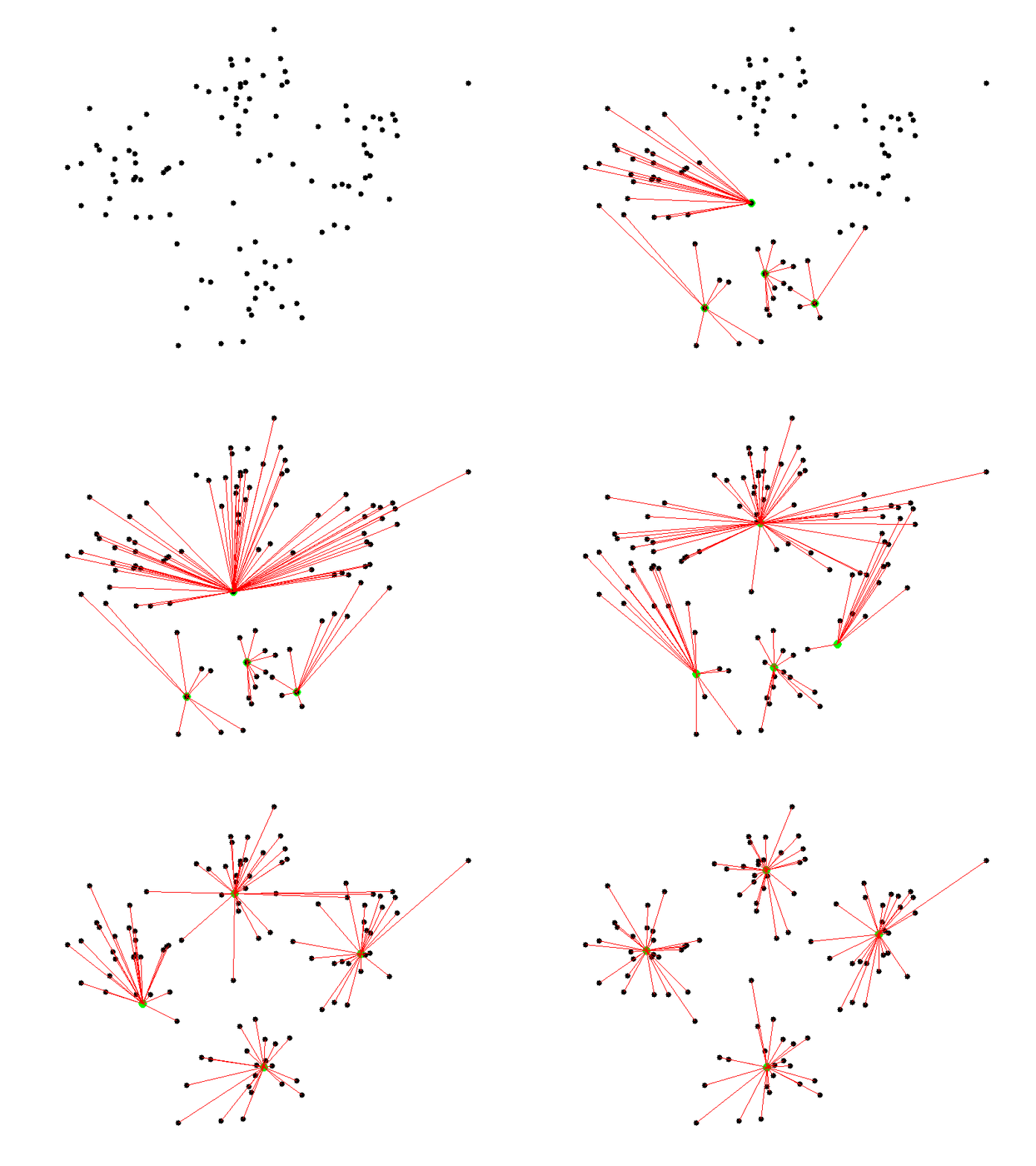
Below you may find an example of 4 random cluster centroids initialization and further clusters convergence:
[Picture Source](http://shabal.in/visuals/kmeans/6.html)
Another illustration of k-means convergence:

## Cost Function (Distortion)
 - index of cluster _(1, 2, ..., K)_ to which example _x<sup>(i)</sup>_ is currently assigned.
 - cluster centroid _k_ () and .
 - cluster centroid of a cluster to which the example _x<sup>(i)</sup>_ has been assigned.
For example:

In this case optimization objective will look like the following:


## The Algorithm
Randomly initialize _K_ cluster centroids (randomly pick _K_ training examples and set _K_ cluster centroids to that examples).


## Files
- [demo.m](./demo.m) - main demo file that you should run from Octave console.
- [set1.mat](./set1.mat) - training data set #1.
- [set2.mat](./set2.mat) - training data set #2.
- [compute_centroids.m](./compute_centroids.m) - compute the next mean centroid for each cluster.
- [find_closest_centroids.m](./find_closest_centroids.m) - split training examples into cluster based on the distance to centroids.
- [init_centroids.m](./init_centroids.m) - randomly init centroids by taking random training examples.
- [k_means_train.m](./k_means_train.m) - function that runs K-Means algorithm.
### Demo visualizations

## References
- [Machine Learning on Coursera](https://www.coursera.org/learn/machine-learning)
- [K-means on Wikipedia](https://en.wikipedia.org/wiki/K-means_clustering)